


Amalfi Coast Beyond Summer – 8 Days
Tour Highlights
- Begin in Salerno: discovering a year-round coastal city where the cathedral, medieval streets and waterfront create an atmospheric introduction to the region.
- Meet two working traditions: following the hand-painted ceramics of Vietri sul Mare and the fishing culture, anchovies and colatura of Cetara.
- Taste the quieter coast: connecting Minori’s pasta and pastry traditions with the vineyards, farms and mountain cooking of Tramonti.
- Explore Amalfi beyond the seafront: from the Cathedral of Saint Andrew and the Arsenal to handmade paper and the neighbouring streets of Atrani.
- See Ravello in its calmer season: with Villa Rufolo, historic lanes and broad coastal views, followed by the village atmosphere of nearby Scala.
- Follow the western coast by road: using Praiano and its viewpoints to introduce Positano’s vertical streets, church and Roman archaeological museum.
- Conclude in Sorrento: where inlaid wood, citrus flavours, historic streets and Marina Grande bring the journey towards the Bay of Naples.
Day 1 Salerno: History, Sea and Winter Light
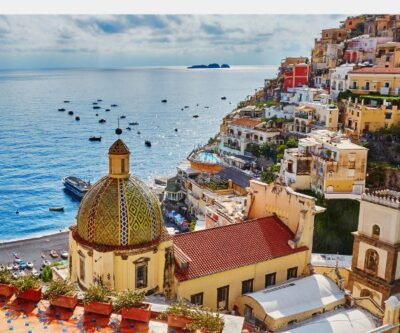 Begin in Salerno, a lively year-round gateway where medieval streets and a long waterfront provide a practical and atmospheric introduction to the Amalfi Coast.
- Cathedral and historic centre: Discover the Cathedral of Saint Matthew, its arcaded courtyard and richly decorated crypt before following Via Mercanti through the layered heart of the old city.
- A city beside the sea: Walk towards the waterfront and notice how Salerno combines everyday urban life with views across the gulf, rather than behaving only as a seasonal resort.
- The coast in its winter mood: Cafés, restaurants and a changing cultural calendar keep the centre active after sunset, while the softer light introduces the quieter rhythm that shapes the days ahead.
Day 2 Vietri sul Mare and Cetara: Ceramics and Fishing Traditions
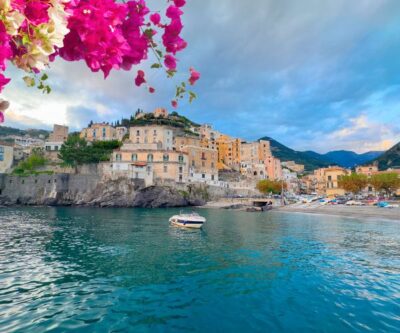
Follow the eastern side of the coast through two towns whose identities are still closely connected to work carried out by hand: ceramics in Vietri and fishing in Cetara.
- Vietri’s ceramic streets: Explore workshops, shopfronts and architectural details decorated with hand-painted tiles, discovering how blue, yellow and green translate the sea, lemons and landscape into everyday objects.
- From craft to contemporary design: A closer look at plates, tables, fountains and decorative panels reveals how traditional techniques continue to evolve without losing their recognisable local character.
- Cetara and the local table: Continue to the small harbour for anchovies, tuna and colatura, using lunch and a walk by the water to understand why food remains inseparable from the village’s fishing heritage.
Day 3 Minori and Tramonti: Pasta, Pastry and the Green Coast
 Move from the seafront atmosphere of Minori into the hills of Tramonti, linking one of the coast’s strongest food towns with a rural landscape of vineyards, orchards and scattered villages.
- Minori at street level: Discover the Basilica of Santa Trofimena, the compact centre and the promenade, where daily life remains closely connected to bakeries, pastry shops and small restaurants.
- Pasta and citrus flavours: Ndunderi, ricotta, local cakes and lemon-based desserts offer a way to explore the town through recipes rather than monuments alone, with each taste connected to family and seasonal traditions.
- Tramonti’s inland character: Explore the green hills behind the coast through vineyards, old farming landscapes and regional cooking, with a winery, farm or rural lunch selected according to the season and your interests.
Day 4 Amalfi and Atrani: Maritime History and Handmade Paper
 Amalfi brings the journey to the historic centre of the coast, where a former maritime republic, a living paper tradition and one of Italy’s smallest towns can be explored within the same day.
- The Cathedral of Saint Andrew: Climb the famous staircase towards the cathedral complex, where the cloister, basilica and crypt reveal religious art alongside the civic confidence of medieval Amalfi.
- Arsenal and handmade paper: Connect the city’s maritime past with the Arsenal and the Compass Museum, then follow the valley towards the Paper Museum to see how water once powered Amalfi’s historic mills.
- Atrani beyond the arches: Continue towards Atrani for its intimate piazza, church façades and streets built into the rock, discovering how a place so close to Amalfi can preserve a completely different scale and atmosphere.
Day 5 Ravello and Scala: Gardens Above the Coast
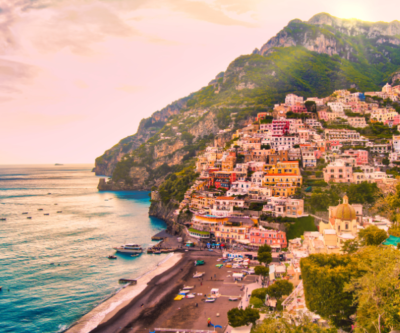
Rise above the shoreline for a day shaped by gardens, stone architecture and the wider geography of the coast, with Ravello and Scala facing one another across the Valle del Dragone.
- Villa Rufolo: Explore medieval courtyards, towers and terraced gardens where architecture and sea views create one of Ravello’s most recognisable settings, especially beautiful in the softer light of the quiet season.
- Ravello’s lived-in centre: Spend time around Piazza Duomo and the surrounding lanes, noticing how churches, ceramics, cafés and viewpoints come together without the intensity of summer crowds.
- Scala across the valley: Discover the older, less-visited settlements of Scala and their views back towards Ravello, adding a quieter village perspective to the day’s celebrated gardens and monuments.
Day 6 Praiano and Positano: The Western Coast in a Quieter Season
 Follow the coast westwards, where Praiano’s open viewpoints and Positano’s vertical townscape reveal how differently the same mountains meet the sea.
- Praiano and the road west: Pause over broad views towards Positano, Li Galli and the Sorrento Peninsula, while churches and small piazzas show a more residential side of the western coast.
- Positano beyond the postcard: Explore the Church of Santa Maria Assunta, stepped lanes, ceramic shops and viewpoints that reveal the town one level at a time, with more space to notice architectural details.
- The Roman villa beneath the town: Visit the MAR archaeological museum to discover frescoed rooms hidden below modern Positano, adding an unexpected Roman chapter to a place usually known for fashion and sea views.
Day 7 – Sorrento: Craft, Citrus and Marina Grande
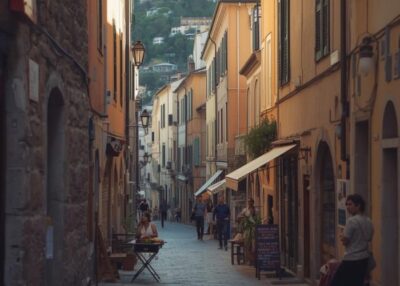
Cross towards the Bay of Naples and discover Sorrento as more than a gateway, following its historic streets from artisan traditions to a fishing quarter below the cliffs.
- Old Sorrento: Explore Piazza Tasso, Sedile Dominova, the Cathedral and the cloister of San Francesco, moving between busy public spaces and quieter lanes lined with small shops.
- Inlaid wood and local making: Discover Sorrento’s marquetry tradition through artisan studios and decorative collections, where fine woods are assembled into detailed landscapes, patterns and domestic objects.
- Marina Grande and the local table: Descend towards the old fishing quarter for pastel houses, boats and seafood, completing the day with citrus flavours and the atmosphere of a neighbourhood that still faces the water.
Day 8 Sorrento: A Final View of Campania
 Conclude with a lighter final chapter that brings together art, local devotion and the dramatic relationship between Sorrento’s town centre and the Bay of Naples.
- Museum or sacred heritage: Choose between the decorative arts and gardens of the Correale Museum or the Basilica of Sant’Antonino, shaping the final cultural visit around your interests and available time.
- Cliffside perspectives: Look across the bay from Sorrento’s public terraces and follow the edge of the historic centre, where deep valleys and coastal cliffs explain the town’s unusual geography.
- The quiet-season journey: Remember the ceramic workshops, fishing villages, paper mills, vineyards and gardens that have shown the Amalfi Coast as a lived-in region rather than only a summer image.

Personalized Travel Services
Bespoke tailor-made itineraries put together by a local expert. You will be assign a dedicated consultant devoted to making your trip extra special.

Heritage Locator
Help with tracking ancestral roots and arranging to meet relatives with the help of a translator and local anagrapher.

Highly Rated & Trusted
Thousands of positive online reviews and happy repeat customers. ASTA members (US), ATOL protected (UK) and AFTA members (Australia) means peace of mind.

Local Presence & Knowledge
Local help desk available when you travel with 24/7 support included in the service.


